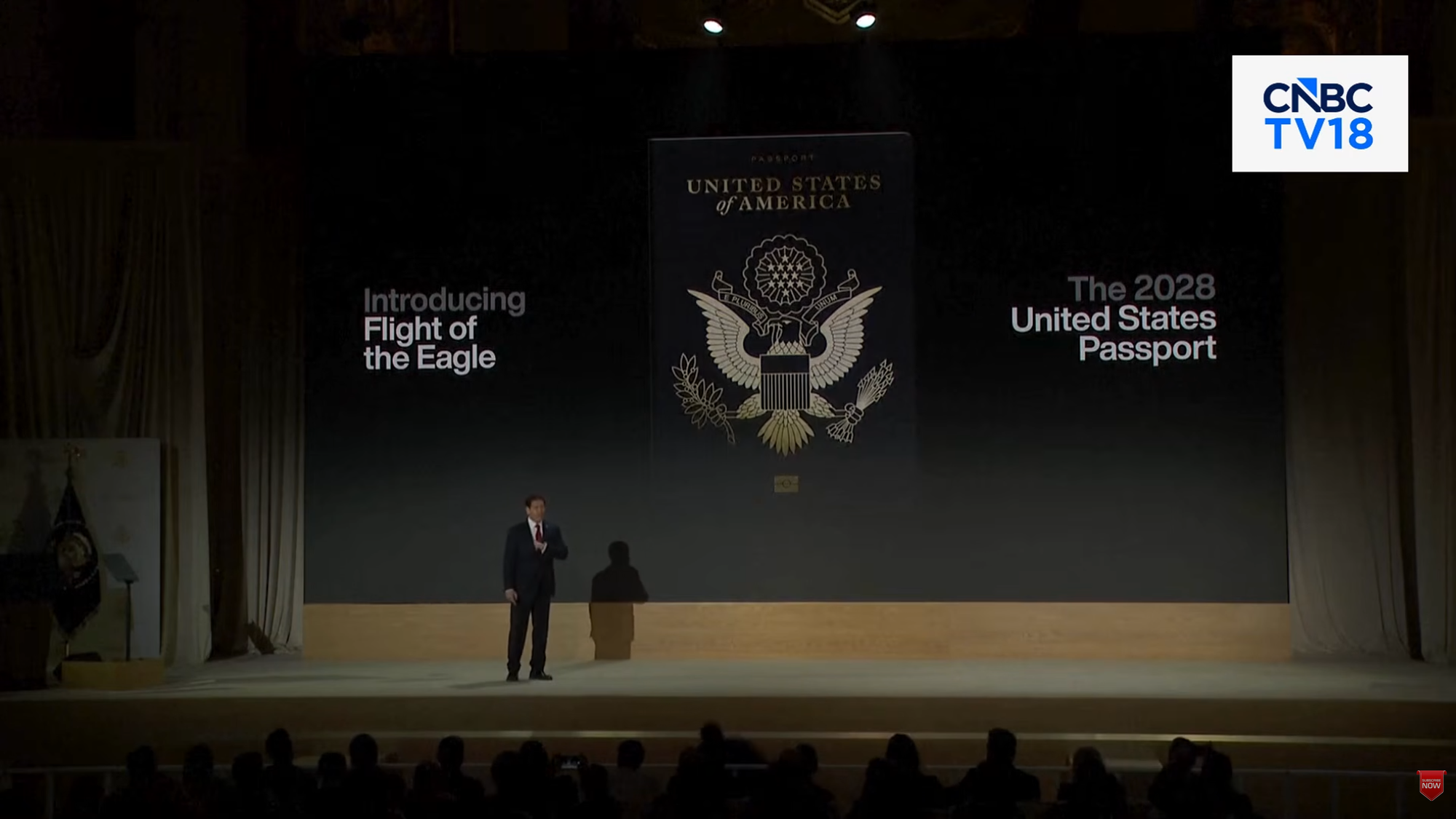
Quick notes on Rubio’s new US passport reveal, in light of my essay on Serif Populism.
Politics aside, this is remarkable, if not historic. When was the last time you saw a prominent politician (the US Secretary of State, no less!) speak for a full 20 minutes about design in the strict sense, that is, the “UX/UI” of an artifact, walking through the whole user journey and discussing features?
To my knowledge, the only thing distantly comparable is Obama’s 2016 intervention at SXSW, which lasted barely two minutes and addressed digital services only in broad terms, as issues for an internal “SWAT team” to fix. In Europe, we recently had Ursula von der Leyen’s New European Bauhaus (“Europe has always been a continent of builders”), but one could argue it was more about policy and diplomacy than design, or about design understood as policy, or even diplomacy cloaked as design. In any case, you don’t see either Obama or von der Leyen talking logos and buttons. So, in the end, what makes this remarkable is precisely its political dimension, as distinct from its political orientation.
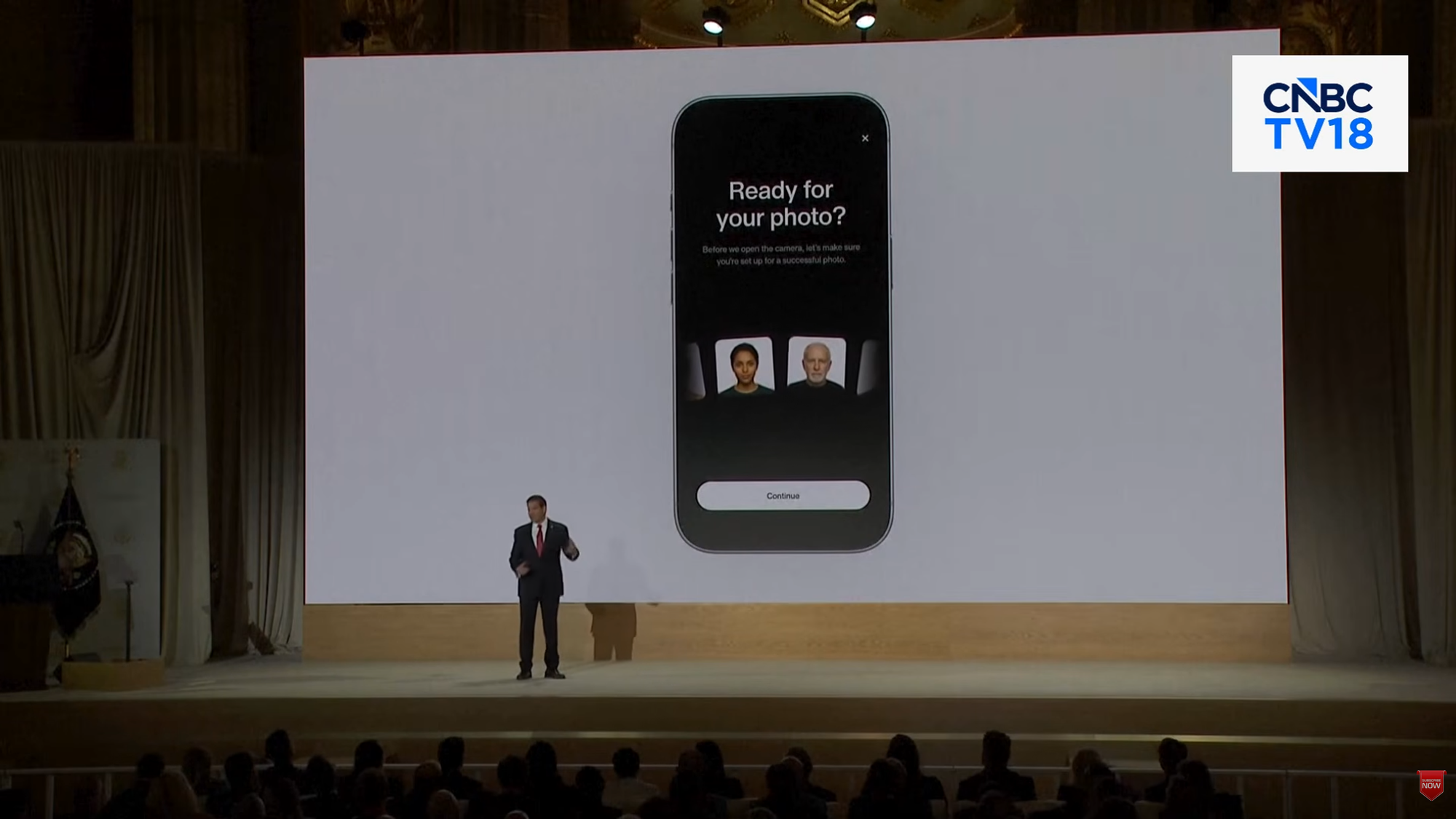
As I’m currently renewing my passport, I find myself envious of the proposed application system. If Rubio managed to pull it off by the end of the year, as he claims, it would undeniably be an achievement. Apparently, the UK introduced online passport renewal some time ago.
Here’s how I defined Serif Populism: “In the populist mindset, ‘serif’ stands for tradition, regardless of whether that tradition is invented. It also stands for beauty, but understood as decoration, often cheap, as in the Oval Office. Thus, Serif Populism is a reaction to what is perceived as sans: sans soul, roots, history; sans decor or decorum.”
What traditions can we identify? “America was designed to rise”, declares Rubio. You can really feel Joe Gebbia’s tech entrepreneurial spin on the now traditional idea of manifest destiny. That’s the “serif” part of the passport reveal.
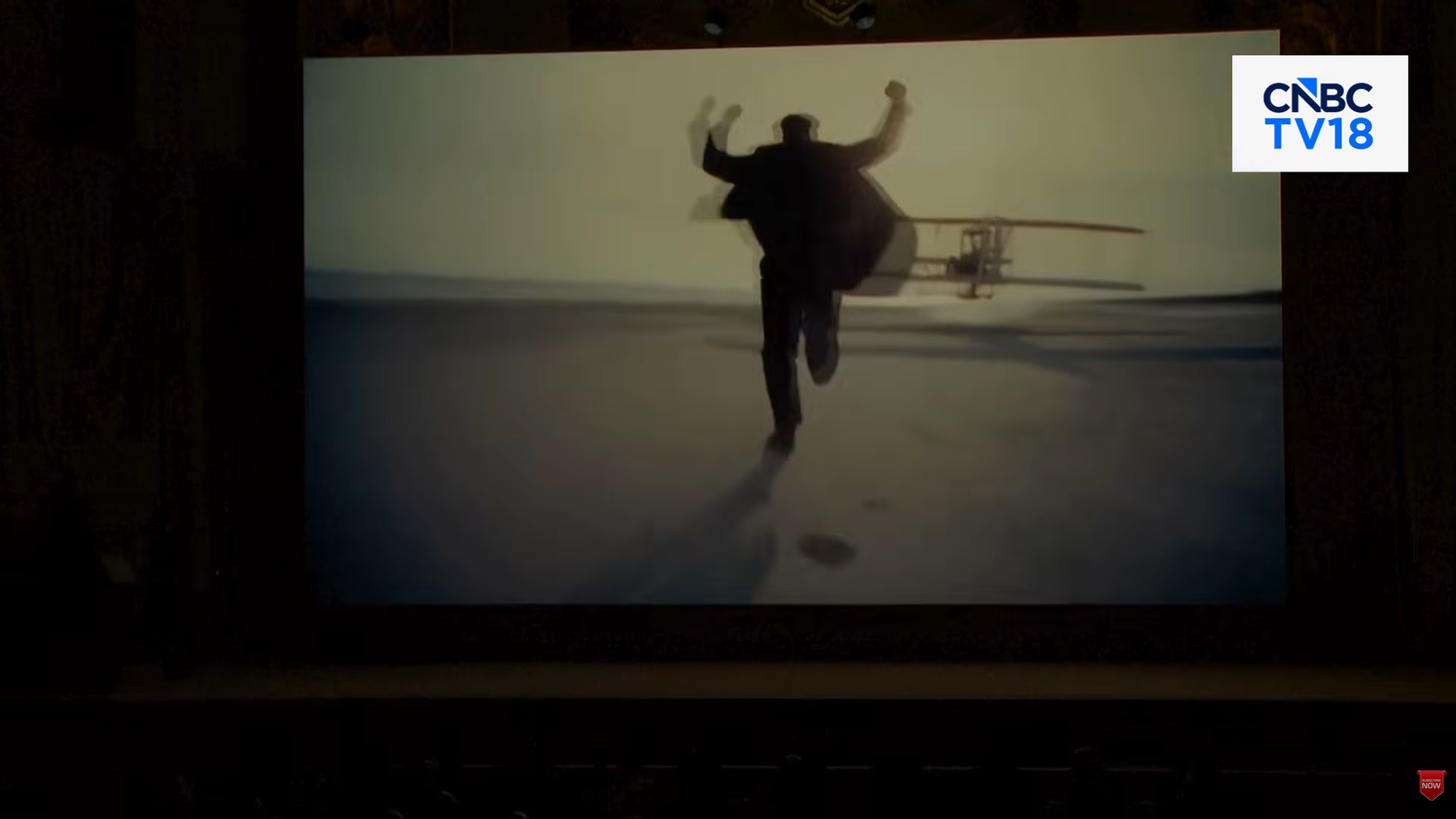
The presentation includes a video, possibly AI-generated, celebrating the American spirit. This is where the “populism” part comes in, with the “two bicycle mechanics from Ohio who taught mankind how to fly”: the hopeful claim that everyone can make it.
At one point, Rubio mentions the gold details on the passport and chuckles. Gold is, in fact, Trump’s true brand, and a good one, since it can be applied to anything. Gold is to Trump what brat green was to liberals in 2024.
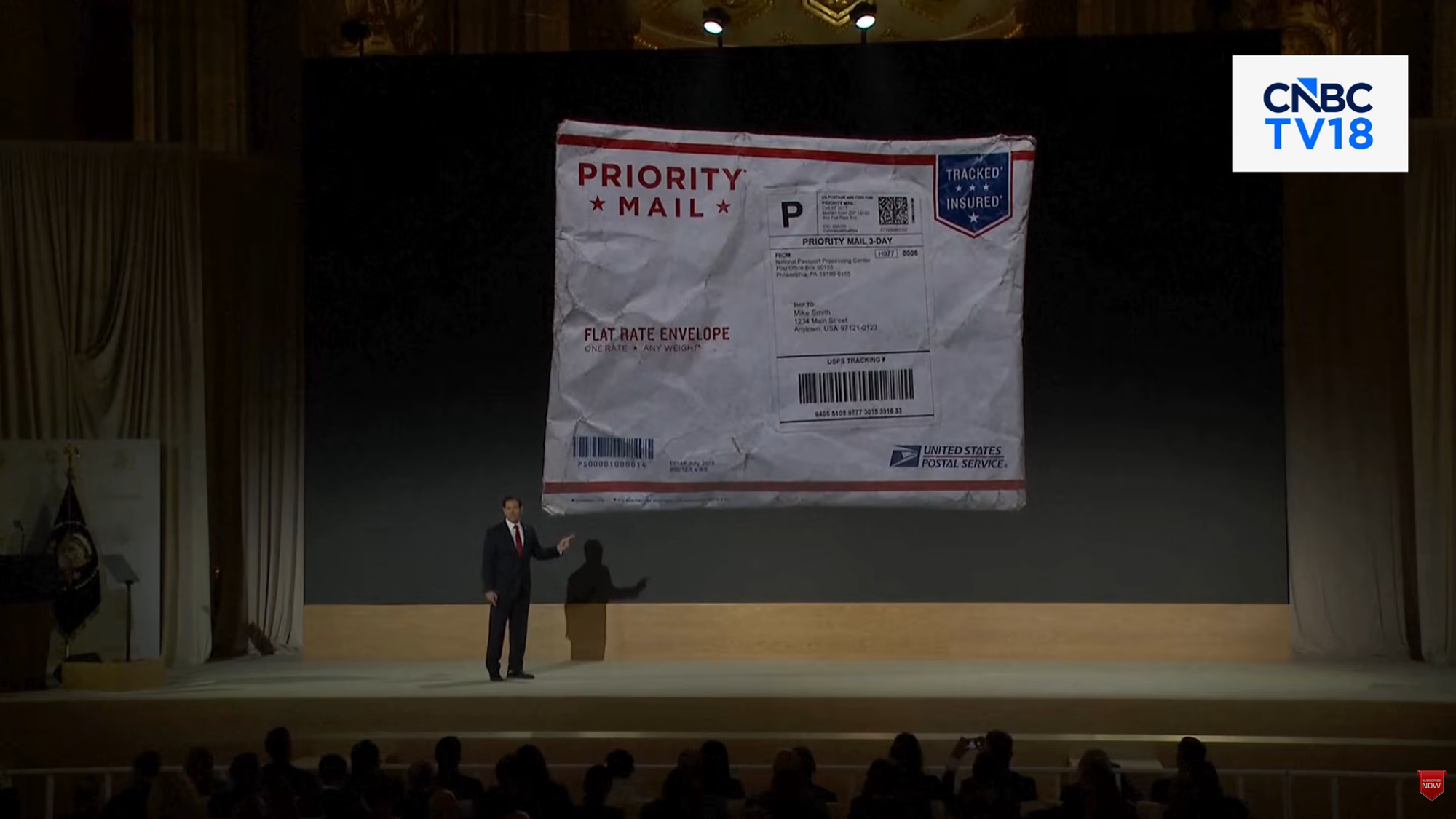
The National Design Studio wanted government services to feel like an Apple Store. It’s almost as if, now that Silicon Valley has bent the knee to the current administration, the latter can finally appropriate the style of the former. The most Steve Jobs passage of the presentation: the passport’s unboxing experience. The document must be “dignified” by an elegant case; it doesn’t belong in a crumpled envelope. All in all, the beautiful packaging is useless: it doesn’t do a better job than the envelope, and probably a worse one when it comes to shipping. In fact, I assume it will itself arrive in an envelope.
The point that interests me, though, is not whether it’s a good solution, but what it tells us about the “role of design”. I’ve increasingly been noticing forms of “designerly” or “artifactual” rhetoric. Is rhetoric simply persuasion? Can a design artifact be devoid of rhetoric? I don’t have the space to answer these questions here, but in the meantime I can point to some preliminary research on the subject, developed with the incredible students of Information Design at Design Academy Eindhoven.
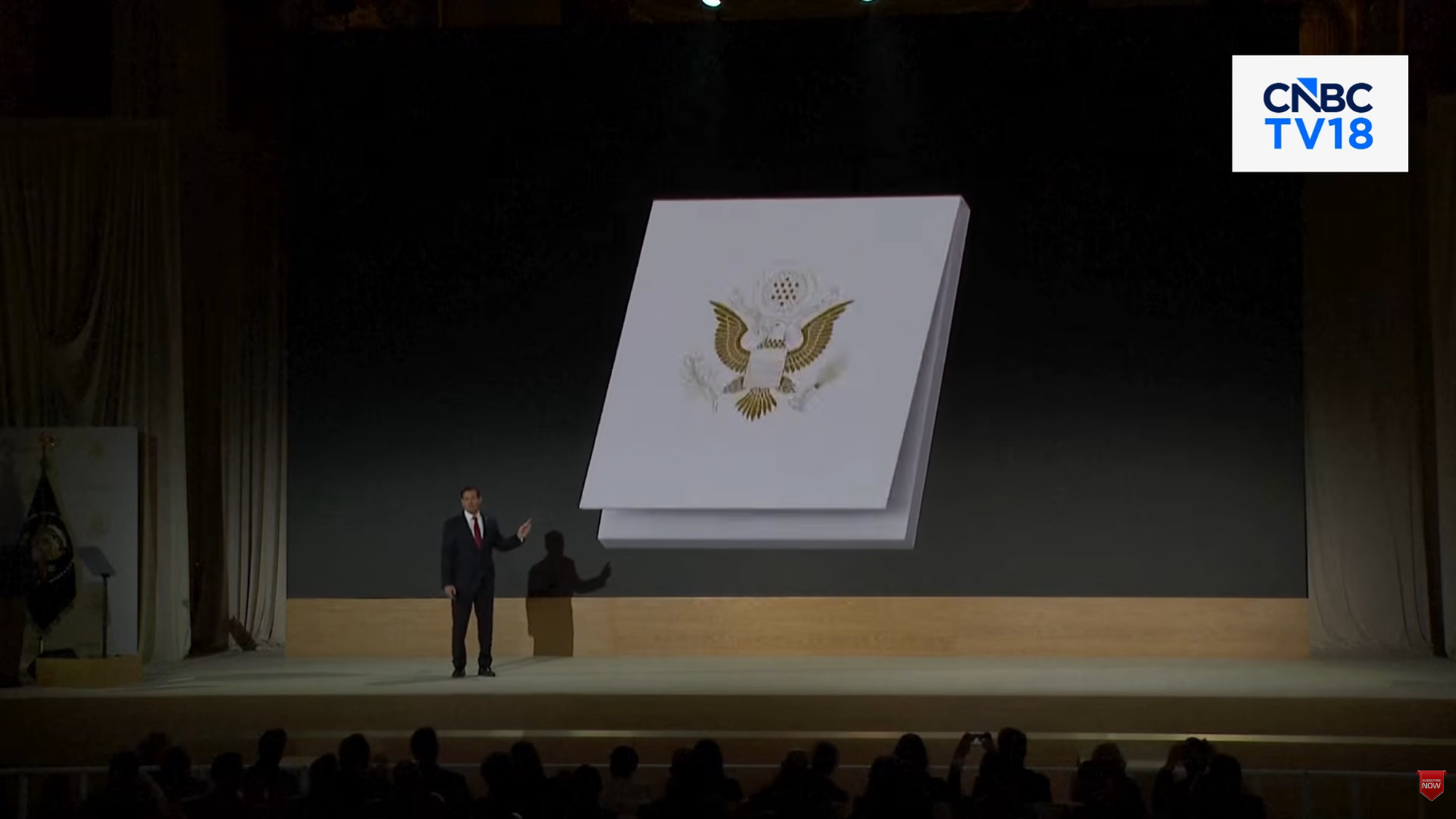
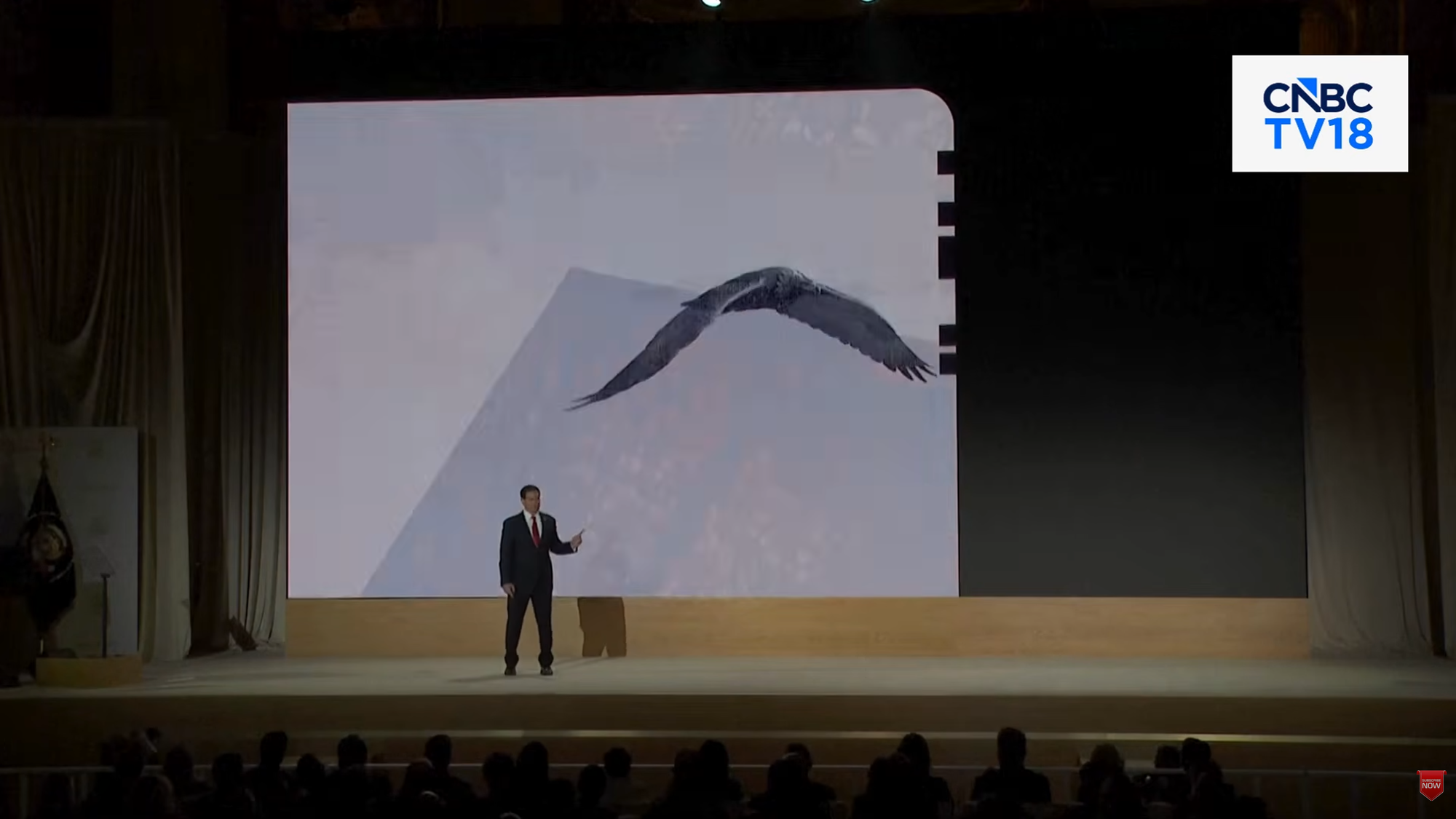
Also, I can’t believe the flipbook eagle idea made it through! Here, I see a parallel with the competition for the new euro banknotes, although the US approach is definitely less “more-than-human” than the European one. In fact, the European idea runs contrary to MAGA values, as the European Central Bank argued that “rivers and birds recognise no borders”.
To conclude, a few politically oriented words. It would be banal to express abhorrence at Marco Rubio’s passport reveal, the same Rubio who revoked the visas of hundreds of protesters for Palestine, whom he called “lunatics”. On this front, a focus on design doesn’t seem to add much: there is no analysis to offer, beyond the mere statement of brutal facts. I hope others prove me wrong, but for a design analysis to be at all useful, it has to say something about design proper and go beyond the contradiction, which is glaringly obvious.